https://docs.google.com/presentation/d/14fXF7MNGlwHiimKZX-G1UQTak_uuEoyymt54mJdU1Jc/edit?usp=sharing
This is my presentation on my preliminary task.
This is my final piece on YouTube; https://www.youtube.com/watch?v=i-nUzzNwyWg&list=UUht5fxUjha19_XNfG0mi2EA
Showing posts with label Preliminary Task. Show all posts
Showing posts with label Preliminary Task. Show all posts
Saturday, 1 November 2014

Monday, 6 October 2014
Utopia Homework - Post Prodcution
The channel 4 sci-fi series Utopia shows a group of adults going against a conspiracy that they've found in a comic book. The TV program is mainly set around the use of colour and films shots done to create the appearance of a comic book.
Post-production is the last stage in film making. In post production, the editing of the shots and any added sounds are put in to make a final piece and correct any minor mistakes. If the original footage isn't good enough/inadequate, then post production probably couldn't fix this. Post production mixes the audio, adds non diegetic sounds and sounds effects and shots are improved and the shot is established.
Post-production is the last stage in film making. In post production, the editing of the shots and any added sounds are put in to make a final piece and correct any minor mistakes. If the original footage isn't good enough/inadequate, then post production probably couldn't fix this. Post production mixes the audio, adds non diegetic sounds and sounds effects and shots are improved and the shot is established.
When I editing my own film pieces, I found this a difficult part to do as I had the look at the audience and create what I would want them, to see on screen and the effect it made. I used effects that went with the theme for a thriller opening.
Preliminary - Our Storyboard
For the planning of our preliminary test, we created a storyboard with all of our ideas. No one in our group is particularly good at drawing so it might be hard to tell what is going on, but we understand it. We've used a story board to show the thriller story that we are going to film. If we get to filming and we happen to change our storyline when it comes to filming, it wont matter.
 Our storyboard gives us the incline on what shot is next or and where to go next. Our story board will give us the sense of direction and continuity to help us achieve a good short thriller. It is there to help us keep on track with what's next to film and will effectively help us out with time as we wont be wasting any. This storyboard is not final, we can still change ideas and camera shots that we think would be more suitable or appropriate for a scene.
We are aiming for the idea of two teenagers in a school setting and one holding one up as hostage. We have chosen to do it in the school setting as it would make sense for us to film in our lunch hours, also the two teenager characters could easily be played by someone in our group or media group, therefore no one else would needed to be involved in this.
We are aiming for the idea of two teenagers in a school setting and one holding one up as hostage. We have chosen to do it in the school setting as it would make sense for us to film in our lunch hours, also the two teenager characters could easily be played by someone in our group or media group, therefore no one else would needed to be involved in this.
Tuesday, 16 September 2014
Framing a shot; Practice with skils
In our year 12 media class, we took our phone camera out to test different camera shots showing the antagonist and protagonist characters in a story. We learnt about leading lines and tried to use them in our camera shots. This is how it went;


.jpg)
.jpg)
.jpg)
.jpg)
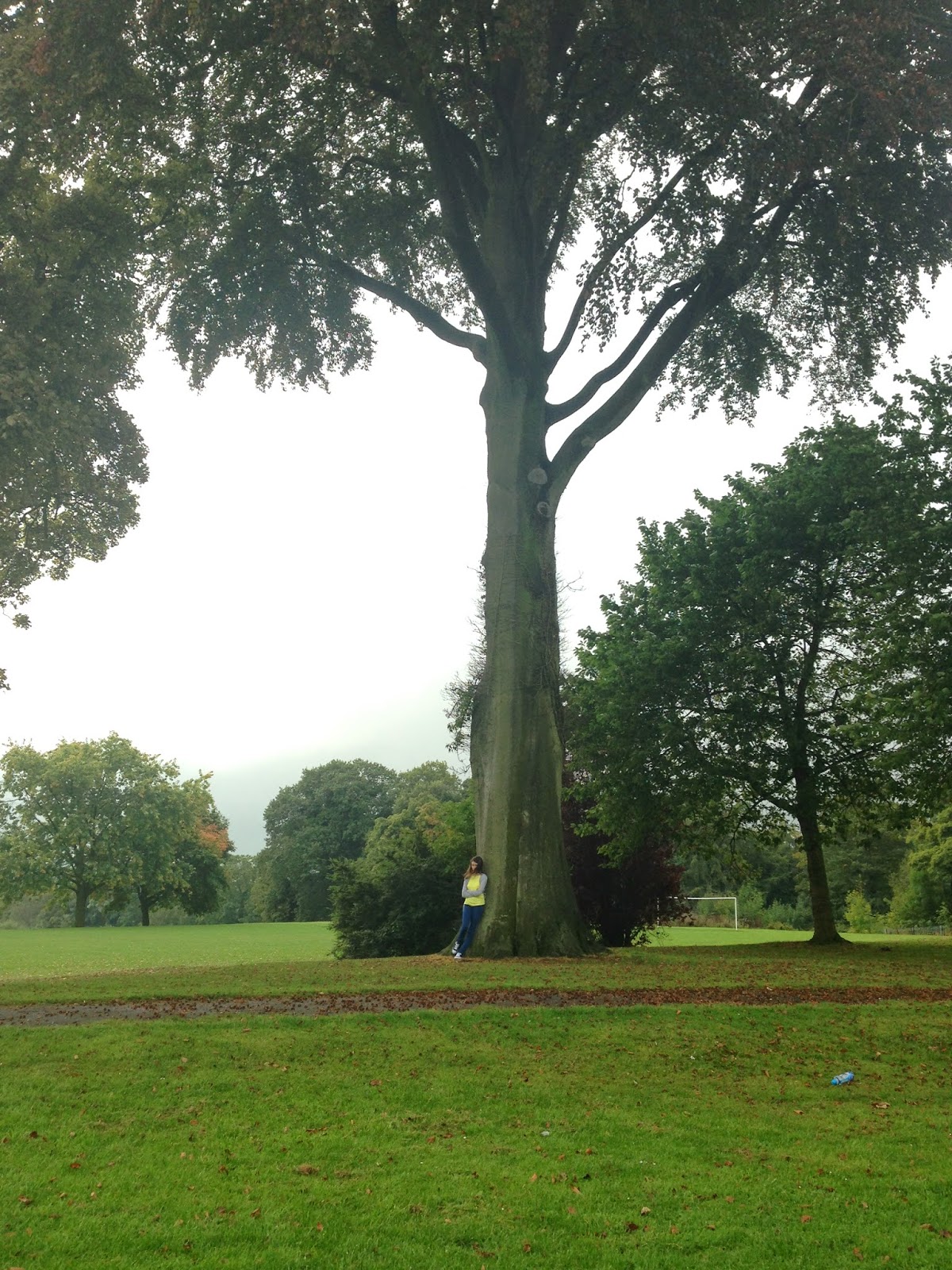


The beginning of our 'story' shows the establishing shot. This is used to set the scene, obviously we used what was available which was this shot using the rule of thirds to help position it in the middle. This shot shows the calm setting and gives the impression of 'the calm before the storm'.
This long shot using leading lines shows the protagonist standing proud in her environment. The long shot shows the scene around the main character which gives the effect like the protagonist is protecting the area.
From this long shot using the rule of thirds, you can't establish the characters apart except from the fact the antagonist is staring at the protagonist, giving the effect of jealousy and anger..jpg)
This is a low angle shot. It has been used in a sinister way to make the antagonist look more powerful and it creates a higher perspective of the character.
This orignally was suppose to be a long shot using background but it after viewing it we didn't think it got that effect. Instead, we decided for the story it would look more realistic if it was a point of view (POV) shot. It could be used as from the antagonist view point, looking down on the protagonist from a high angle shot to make the hero actually look weaker in the antagonists eyes.
This is a extreme close up and shows the antagonist strangling the protagonist. It has been used to show a important detail.
This mid shot is used to show the characters feelings. We see the antagonist full of hatred towards the protagonist. I'm portraying the protagonist and the reason I looked at the camera is because it gives the impression that the main character doesn't feel anything to the villain, as in a way that they aren't even there because they aren't important.
This is part of the 'three different viewpoints with different camera shots'. This first one is the long shot of the antagonist. The long shot gets the back ground and the villain stands out with the pose they are doing.
Again, a low angle shot making the antagonist look more evil. The low angle makes the villain appear more powerful than they are.
This one is my favourite photo. We used a mid shot to catch the villains emotions. The wind sweeping over the face plays a good part and makes the whole photo look more dramatic.
Subscribe to:
Comments (Atom)